01 Brief
the situation
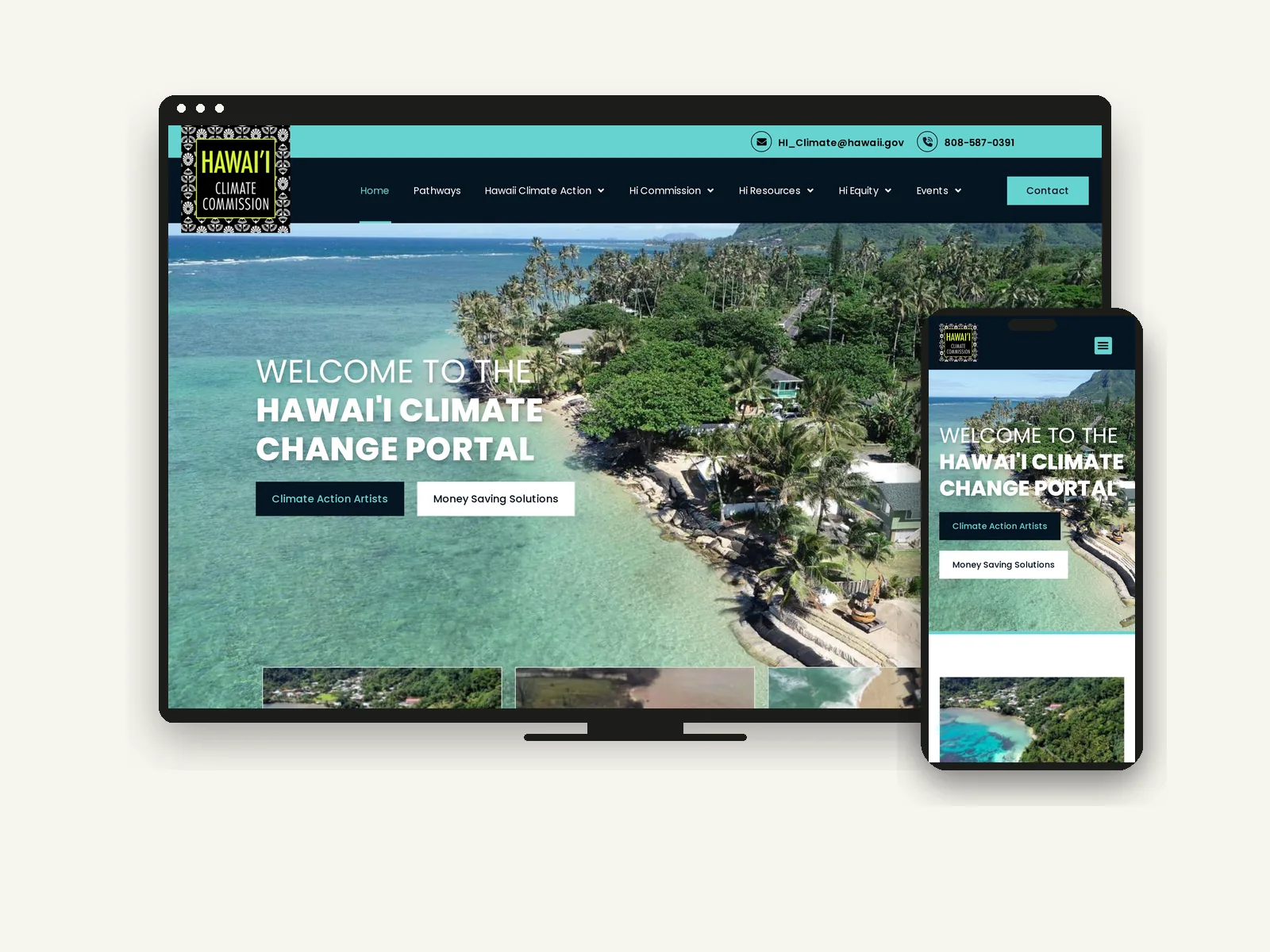
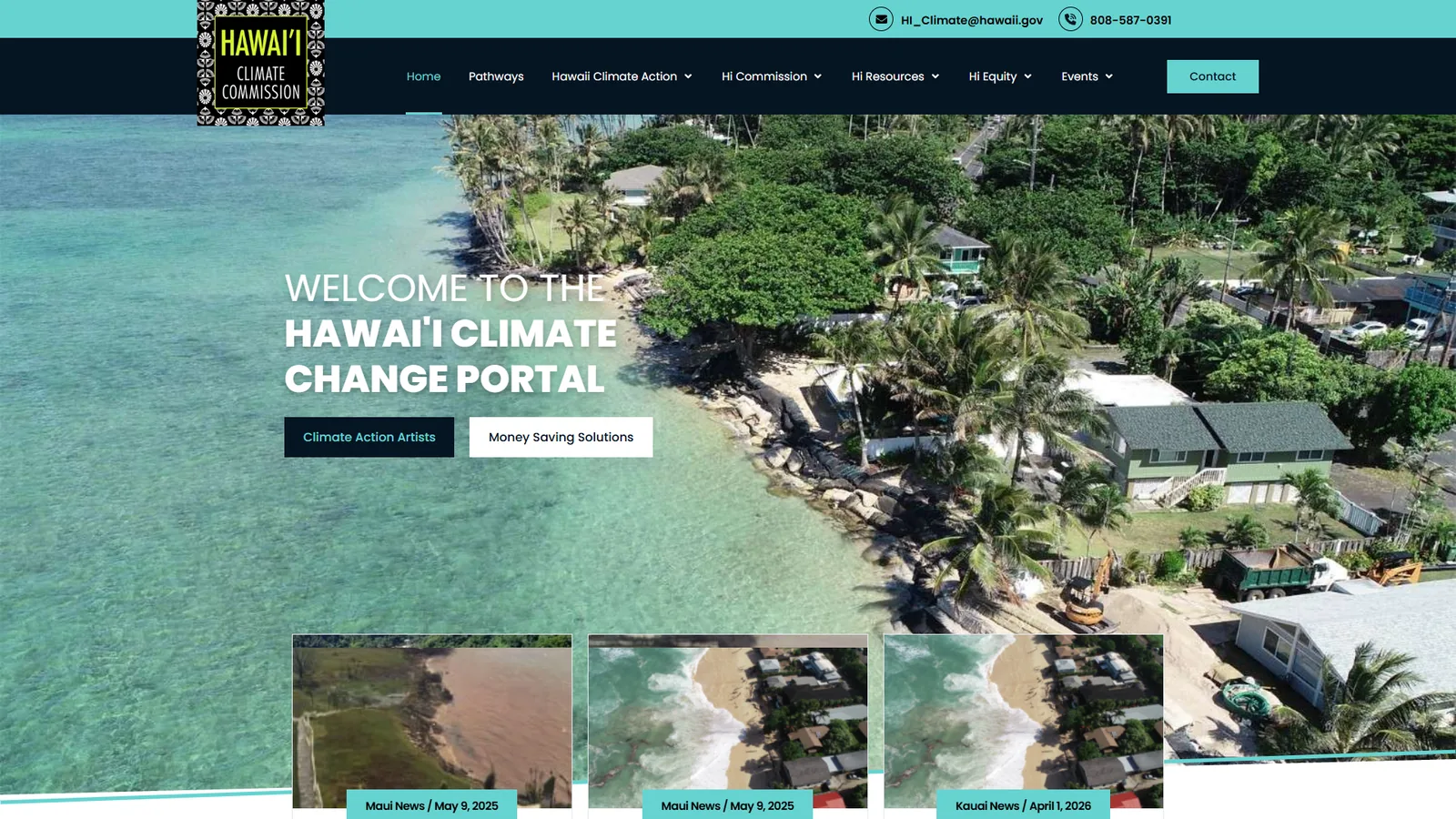
Hawai‘i’s State Climate Change Mitigation and Adaptation Commission didn’t have a website. Its work sat as a news feed buried inside a larger department’s site — easy to miss, impossible to own. They needed a real home: every island served, 37 climate pathways published, and a team of non-developers able to run it themselves. A State of Hawai‘i contract, over a year of work — and one we cared about, because this is our state’s coastline too.
02 Discovery
what we found
Two problems, both the kind that sink a timeline. First: 37 distinct climate sectors, each needing a deep, identically-structured page — sea level rise on our shores, our coral reefs, our ‘aina, on and on. Second, and harder: the Commission wanted residents across the islands to submit events, but no government office has the staff to babysit a moderation queue or sweep out expired listings by hand. So we made the site do it.
03 Design
the design approach
They knew exactly what it should feel like — a dark, ocean-and-‘aina identity that reads as official State of Hawai‘i — and our job was to hit it precisely, 37 times, without it collapsing into a wall of policy text. Dense made navigable. That’s the craft.
04 Build
how it was built
Government-scale content needs government-scale structure. Built on WordPress with Elementor:
- 37 Climate Action Pathways pages — a single deep template repeated across all 37 sectors, each carrying structured sections (Numbers & Targets, Key Features, Challenges & Opportunities, State & County Actions, measure tables, case studies, and resource links). Built to hold a large volume of policy content while staying consistent and navigable.
- Custom moderated community event system — residents and partner organizations submit events through a front-end form; submissions enter a moderation queue for Commission staff to review and approve; approved events publish to the calendar automatically; and each event auto-expires off the site once its date has passed. No manual cleanup, no stale listings.
- Supporting systems — news/press, commission meeting schedule, “Meet the Commission” member profiles, the Climate Action Artist Residency feature, and an Instagram feed, all managed in-house.
05 Launch / Ongoing
the relationship
The portal is live at climate.hawaii.gov. But the clearest measure of the work is this: before the first site even shipped, the State hired us for a second one. A rebate finder, same initiatives. The State of Hawai‘i had its pick of vendors. It kept the local team.
06 Outcome
the result